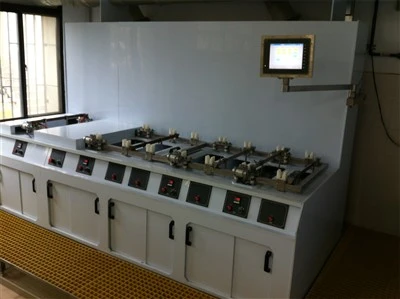
As a supplier of Barrel Plating Equipment, I often get asked if our equipment can be used for plating parts with sharp edges. It's a valid question, and one that deserves a thorough answer. In this blog post, I'll dive into the details of using barrel plating equipment on parts with sharp edges, discussing the pros, cons, and some tips to make it work effectively.
Understanding Barrel Plating
Before we get into the specifics of sharp-edged parts, let's quickly go over what barrel plating is. Barrel plating is a process where a large number of small parts are placed in a barrel, which is then submerged in an electroplating solution. The barrel rotates, allowing the parts to tumble and come into contact with the plating solution and the electrical current. This method is great for plating high volumes of small parts efficiently.
Challenges of Plating Sharp-Edged Parts
Plating parts with sharp edges using barrel plating equipment does come with some challenges. The main issue is the uneven distribution of the plating. Sharp edges tend to attract more of the plating material due to the higher electrical field concentration at these points. This can result in thicker plating on the edges compared to the rest of the part.
Another problem is the potential for damage to the sharp edges during the tumbling process. The constant movement and contact between the parts in the barrel can cause the edges to become dulled or chipped. This is especially true for parts made of softer materials.
Can It Be Done?
The short answer is yes, barrel plating equipment can be used for plating parts with sharp edges, but it requires some careful planning and adjustments.
One of the key factors is the design of the barrel. Using a barrel with a smooth interior and a gentle rotation speed can help reduce the risk of damage to the sharp edges. Additionally, adding some cushioning materials, such as plastic pellets or rubber balls, to the barrel can further protect the parts.
Controlling Plating Thickness
To address the issue of uneven plating thickness, we can make some adjustments to the plating process. For example, we can use a lower current density to reduce the build-up of plating material on the sharp edges. We can also adjust the plating time to ensure that the rest of the part gets an adequate amount of plating.
Another technique is to use masking. By covering the areas around the sharp edges with a non-conductive material, we can prevent the plating material from accumulating in these areas. This requires some additional preparation work, but it can be very effective in achieving a more uniform plating thickness.
Our Equipment and Its Suitability
At our company, we offer a range of barrel plating equipment that can be adapted to handle parts with sharp edges. Our Alkaline Zinc-Nickel Barrel Plating Equipment is designed with advanced control systems that allow for precise adjustment of the plating parameters. This means we can optimize the process to minimize the impact on the sharp edges.
Similarly, our Acid Zinc-Nickel Barrel Plating Equipment offers flexibility in terms of current density and plating time, making it suitable for a variety of part geometries, including those with sharp edges.
Other Equipment Considerations
In addition to the barrel plating equipment, we also offer other related equipment that can enhance the plating process. Our Industrial Pure Water Equipment ensures that the plating solution is of high quality, which can improve the overall plating results.
For more specialized applications, such as plating Airpods with Cu-Pd-Au & Rh/Ru, our Airpods Cu-Pd-Au & Rh/Ru Plating Equipment provides a precise and reliable plating solution. And for those looking for nickel-gold plating, our Nickel-Gold Plating Equipment is a great option.
Tips for Plating Sharp-Edged Parts
Here are some additional tips for successfully plating parts with sharp edges using barrel plating equipment:
- Pre-treatment: Make sure the parts are properly cleaned and pre-treated before plating. This can help improve the adhesion of the plating material and reduce the risk of defects.
- Batch size: Adjust the batch size to ensure that there is enough space for the parts to move freely in the barrel. Overcrowding can increase the risk of damage to the sharp edges.
- Monitoring: Continuously monitor the plating process to ensure that the plating thickness and quality are within the desired specifications. Make adjustments as needed.
Conclusion
In conclusion, while plating parts with sharp edges using barrel plating equipment presents some challenges, it is definitely achievable. By understanding the issues involved and making the necessary adjustments to the equipment and process, we can produce high-quality plated parts with sharp edges.
If you're interested in learning more about our barrel plating equipment or have any specific requirements for plating parts with sharp edges, don't hesitate to get in touch. We're here to help you find the best solution for your plating needs.

References
- "Electroplating Engineering Handbook" by Lowenheim, F. A.
- "Modern Electroplating" by Schlesinger, M. and Paunovic, M.